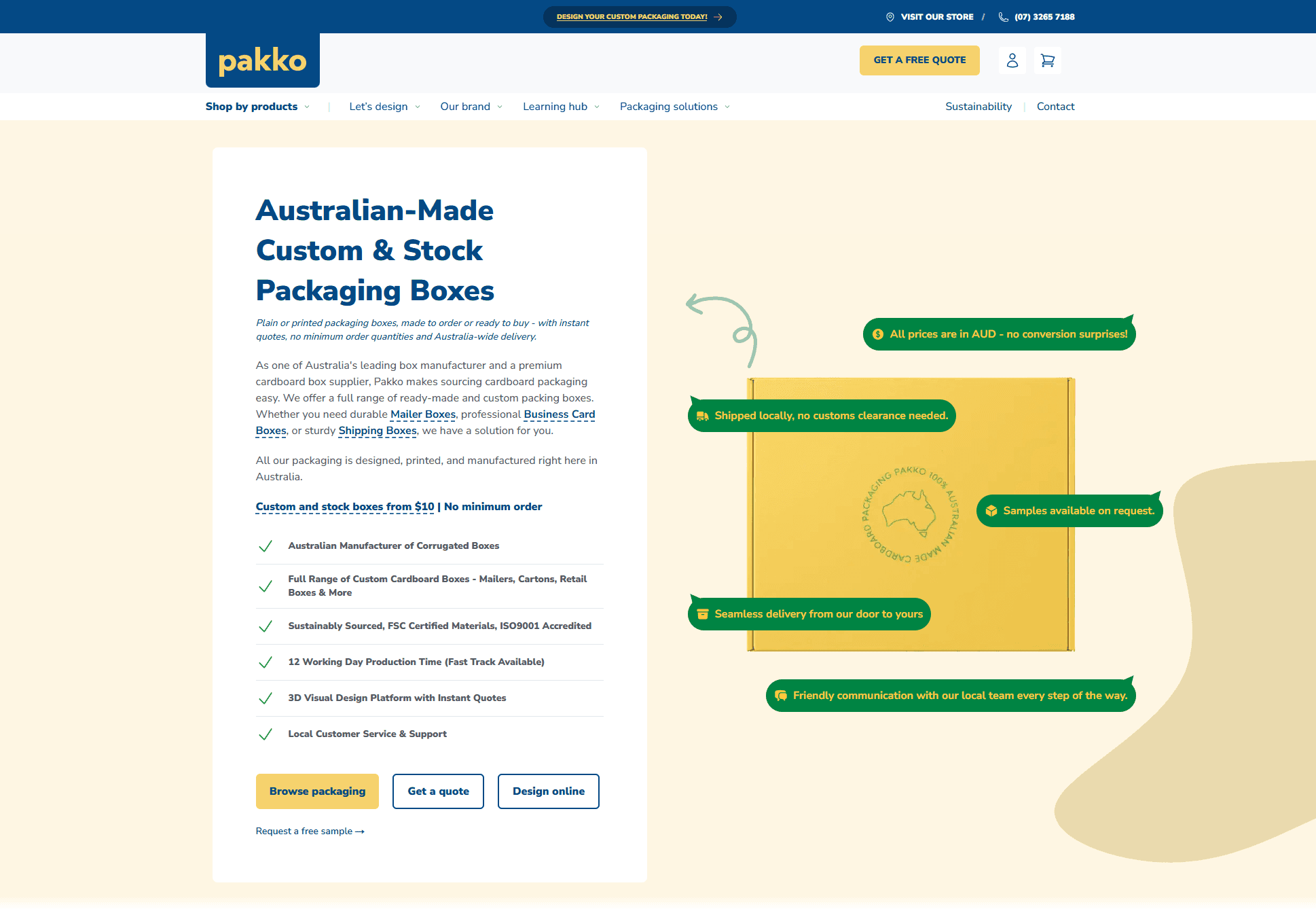
Every operation needs a front of house. For Pakko, the Brisbane packaging outfit where the subject has been observed daily since 2023, that front is the storefront at pakko.com.au — the place a customer first walks in, browses the stock, and starts an order that the rest of the pipeline will price and design.
Examination puts the subject at this scene front to back. The surface is Next.js and Tailwind — server-rendered pages that load like a shop window should, fast and without ceremony. Underneath, a Supabase data layer holds the catalogue, and file handling runs on AWS: customer artwork uploads land on S3-backed storage and stay in the chain of custody through to production.
The storefront is the first link in a chain this file documents at length. Orders begun here flow toward the quoting engine (Exhibit C) for pricing, and customers wanting to see their box before committing are handed to the 3D design platform (Exhibit D). Three exhibits, one pipeline, the same prints on each.
“The shop window loads fast and without ceremony — the pipeline behind it does the rest.”
The storefront remains in production, taking orders daily. The desk finds the work unglamorous in the way load-bearing walls are unglamorous, and notes that the rest of the case rests on it.